Thermometers
A thermometer is a simple but important tool to have at home, especially if you have children or want to monitor symptoms when someone is unwell. Checking body temperature can help you recognise a fever and decide whether further care or treatment may be needed.
Why temperature matters
Fevers are commonly caused by infections such as colds, flu, or other illnesses, and while they can be uncomfortable, they are often the body’s natural way of fighting infection.

Normal body temperature usually sits around 36.5–37.5°C, although it can vary slightly from person to person and throughout the day. A temperature above about 38°C is generally considered a fever. In babies, young children, and older adults, even a small change can be more significant, so reliable readings are important.
Types of home thermometers
Common home thermometers include:
Digital oral/underarm thermometers: simple to use, but readings can take 30–60 seconds and require contact under the tongue or arm.
Ear thermometers: quick, but need disposable probe covers and correct positioning in the ear canal.
Infrared forehead thermometers: non‑contact, very fast, and useful for checking children without disturbing them.
Many families choose an infrared forehead thermometer because it is easy to use on sleeping or wriggly children, or when multiple family members need to be checked.
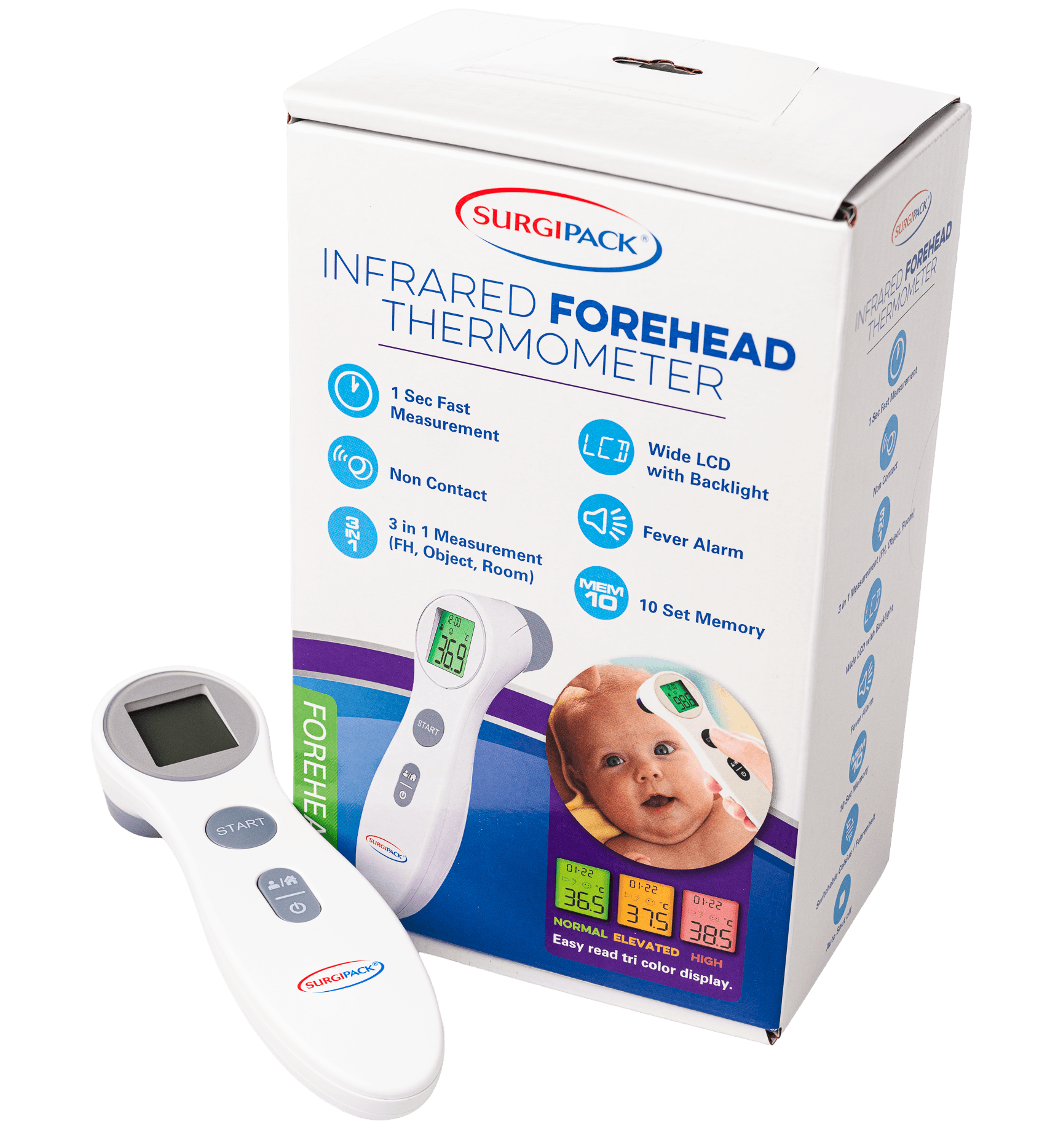
Surgipack Infrared Forehead Thermometer
Surgipack Infrared Forehead Thermometer allows a 1 second, non-contact measurement of the body temperature via scanning of the forehead. This device has no age or gender limitations and provides the advantage of temperature measurement without disturbing the individual.
The thermometer features a wide LED screen colour-coded display that makes results easy to interpret at a glance:
Green: below 37.5°C
Amber: 37.5°C - 38.5°C
Red: above 38.5°C
If a fever is detected, the built-in fever alarm provides an alert so you know immediately when a temperature is elevated.
In addition to measuring body temperature, this thermometer also has a 3 in 1 function, allowing it to measure human, object and room temperatures. This can be helpful for checking things like bedroom temperature or even the warmth of a baby’s bottle.
Other convenient features include the ability to switch between Celsius and Fahrenheit, as well as memory for up to 10 previous readings, which can help you track temperature changes over time.
Always follow the instructions in the pack and contact your pharmacist if you are unsure how to use the thermometer.
When to seek help
See a doctor or ask your pharmacist for advice if:
a baby under 3 months has a fever.
a child or adult seems very unwell, drowsy, in pain, or is not drinking enough.
a fever lasts more than a couple of days, or you are worried at any time.
A home thermometer can’t diagnose the cause of a fever, but it is a useful tool to help you monitor symptoms and decide what to do next.

