Dry Mouth
Dry mouth, also known as xerostomia, is a common condition that happens when your mouth does not produce enough saliva.
Saliva plays an important role in keeping your mouth comfortable, protecting your teeth and supporting good oral health. When saliva levels are low, your mouth can feel dry, sticky or uncomfortable, and everyday activities such as eating, speaking and swallowing may become more difficult.
Dry mouth can happen occasionally, or it can be an ongoing problem. Understanding what causes it and how to manage the symptoms can help support your oral health and improve your comfort.

What causes dry mouth?
Dry mouth can have several causes. Some people experience it as a side effect of medicines, including certain antihistamines, antidepressants and blood pressure medications. It can also be linked to dehydration, mouth breathing, stress or medical conditions that affect saliva production.
Dry mouth is particularly common at night, especially if you sleep with your mouth open or have nasal congestion.
Symptoms of dry mouth
Dry mouth can affect more than just how your mouth feels. Common symptoms include:
a dry, sticky or uncomfortable feeling in the mouth
thick or stringy saliva
dry or cracked lips
a sore, burning or irritated mouth
difficulty chewing, swallowing or speaking
changes in taste or bad breath
increased risk of tooth decay and oral infections
Saliva helps protect teeth by washing away food particles and supporting the mouth's natural defences. When saliva production is reduced, teeth and gums may be more vulnerable to problems.
How can you manage dry mouth?
There are several simple ways to help relieve dry mouth symptoms and support oral health.
Stay hydrated: Drink water regularly throughout the day. Taking small sips of water can help keep your mouth comfortable, although water alone may not resolve ongoing dry mouth.
Use saliva-friendly products: Products designed for dry mouth can help moisturise the mouth and provide relief from discomfort. Look for oral care products that support moisture without unnecessarily irritating sensitive tissues.
Maintain good oral hygiene: Brush your teeth twice a day using fluoride toothpaste and clean between your teeth regularly.
Avoid things that can worsen dryness: Alcohol, smoking and excessive caffeine may contribute to dry mouth or make symptoms feel worse for some people.
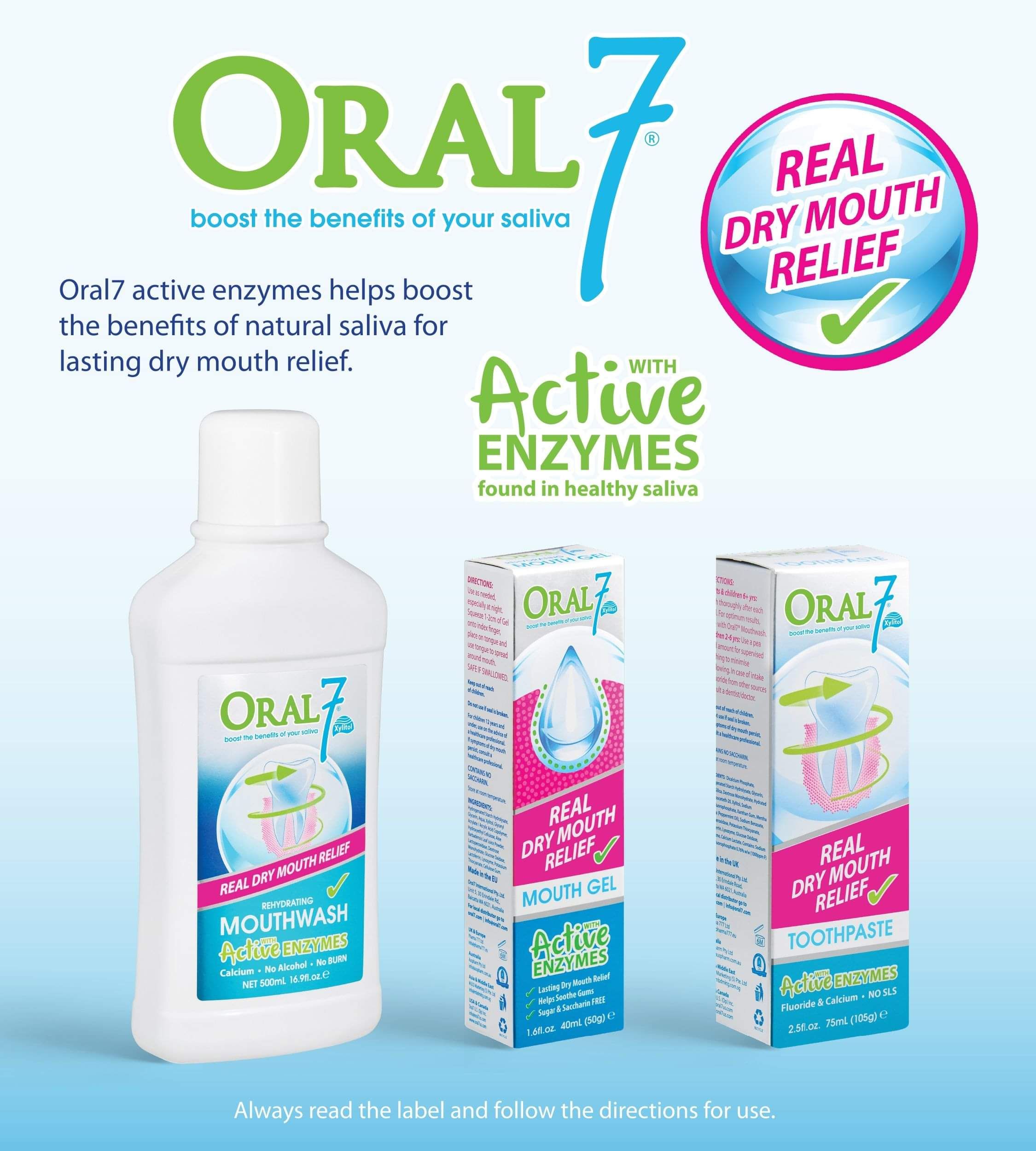
Piksters ORAL7 Range
The ORAL7 range from Piksters is designed to support the mouth's natural protective functions, using active enzymes for lasting dry mouth relief.
ORAL7 Mouth Gel
ORAL7 Mouth Gel helps moisturise a dry mouth and provides lasting comfort. It can be applied to the inside of the cheeks, tongue, gums and under the tongue. The gel is safe to swallow and can be used throughout the day or before bed to help relieve dryness.
ORAL7 Toothpaste
ORAL7 Toothpaste contains natural enzymes to support the mouth's own defence system. It is a low-foaming formula that does not contain sodium lauryl sulphate (SLS), a detergent used in many toothpastes. The toothpaste helps clean away bacteria associated with plaque, bad breath and gum problems, making it a useful option for daily oral care.
ORAL7 Mouthwash
ORAL7 Mouthwash is designed to freshen breath, soothe oral discomfort and help maintain a balanced oral environment. The mouthwash is intended to be used as part of a daily oral care routine and can be used alongside Oral7 Toothpaste and Mouth Gel.